When you get quotes for commercial carpet cleaning, the number that usually gets compared is the price. The number that actually determines the result is what's parked outside. Here's the difference between truck-mounted and portable extraction, without the sales pitch.
What hot-water extraction actually does
Hot-water extraction — what most people call steam cleaning — sprays a heated cleaning solution into the carpet under pressure, then immediately vacuums the solution and the suspended soil back out. Three variables decide how well that works: how hot the water is, how much pressure it's applied with, and how much of it is recovered. Every method is a trade-off between those three.
Portable extractors
A portable unit is a wheeled tank with a pump and a vacuum motor, plugged into a wall outlet. It has real uses — upper floors with no hose access, small spot jobs, buildings where a truck can't park. But it's limited by the outlet it's plugged into. Water heats slowly and cools fast, pressure is modest, and the vacuum motor can only lift so much. The practical result is that more solution stays in the carpet, dry times stretch toward a full day, and the residue left behind attracts new soil — which is why carpets cleaned with portables often look dingy again within weeks.
Truck-mounted extractors
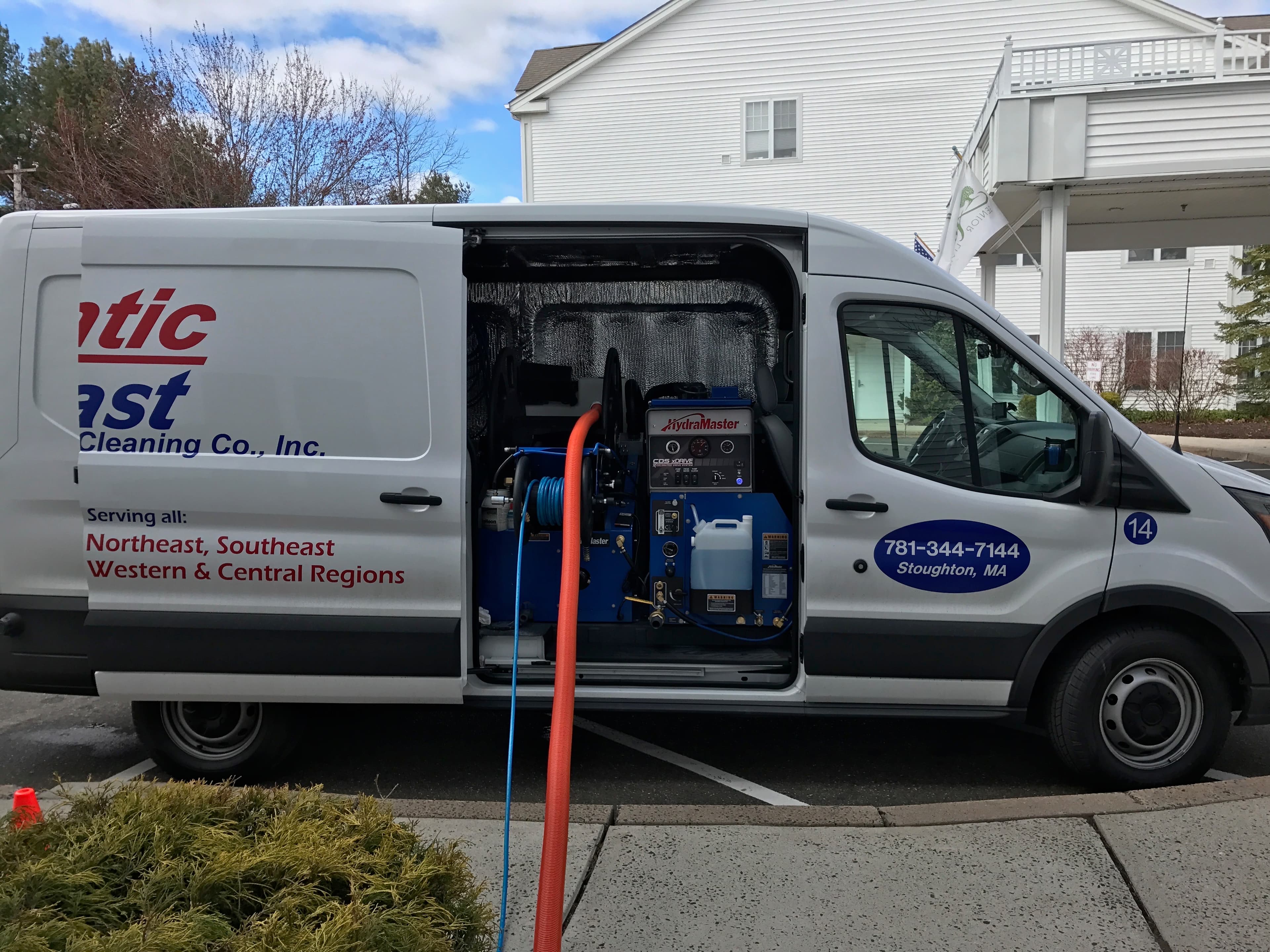
A truck-mounted system is powered by its own engine or the vehicle's, and the tank, heater, pump and vacuum all stay in the truck. Only the hoses and the wand come into the building. The unit generates far more heat, far more pressure and far more vacuum than anything you can plug into a wall. Our systems reach temperatures up to 200°F at the wand, which is what breaks down the oily film that binds soil to synthetic fiber. Recovery is strong enough that high-traffic corridors are typically walkable in a couple of hours.
| Portable | Truck-mounted | |
|---|---|---|
| Power source | Wall outlet | Dedicated engine in the vehicle |
| Water temperature | Warm, drops during the job | Sustained high heat |
| Recovery (water pulled back out) | Partial | High — carpet is damp, not wet |
| Dry time | 8–24 hours | Typically 2–4 hours in corridors |
| Residue left behind | More | Minimal |
| Noise and fumes inside | Machine runs in the room | Equipment stays outside |
| Best use | No exterior access, small spots | Whole floors, corridors, lobbies, programs |
What it means for a facility manager
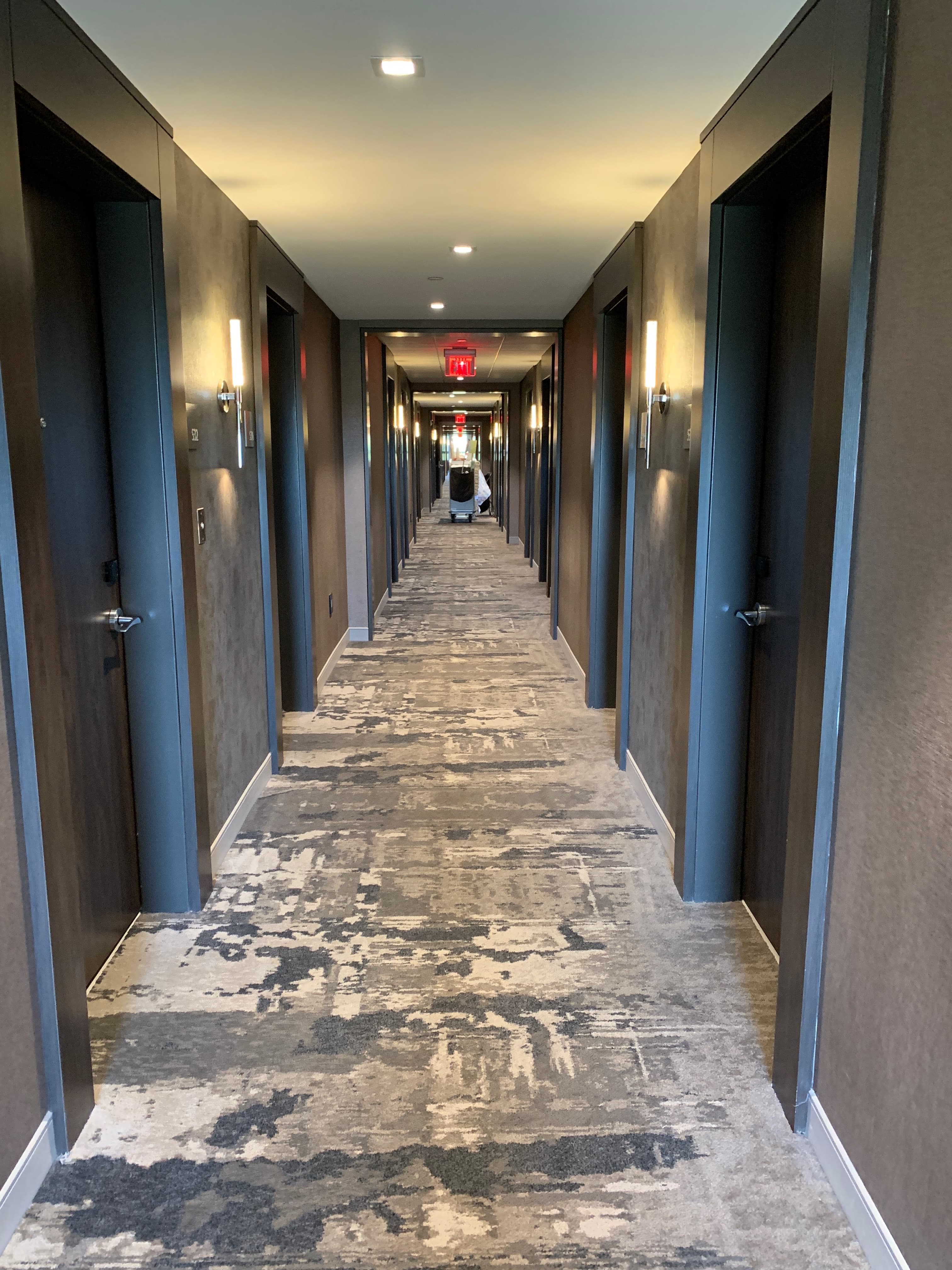
- Shorter closures. A corridor cleaned overnight with a truck-mount is dry by breakfast; with a portable it may still be damp at check-out.
- Less odor risk. Slow-drying carpet in a warm building is how the "wet dog" smell starts. Fast recovery avoids it.
- Longer intervals between cleanings. Less residue means slower resoiling, which means fewer visits per year.
- Quieter buildings. The loud part stays in the parking lot — a real advantage in senior living and healthcare.
- Better outcomes on the hard stuff: wicking stains, salt residue, restaurant and dining-room soil.
When we do use a portable
We're not dogmatic about it. High floors in a downtown tower with no hose route, a single stained office, an area rug in a lobby — a professional-grade portable in trained hands is the right tool for those. The point is that it should be the exception on a commercial account, not the plan.
Questions we get about this
Related services
Keep reading
More guides for facility managers
Carpet · 6 min
How often should commercial carpet be cleaned?
Deep-extraction frequency for hotel corridors, senior living common areas, offices and healthcare — and the daily/weekly maintenance that stretches the time between visits.
Read the guide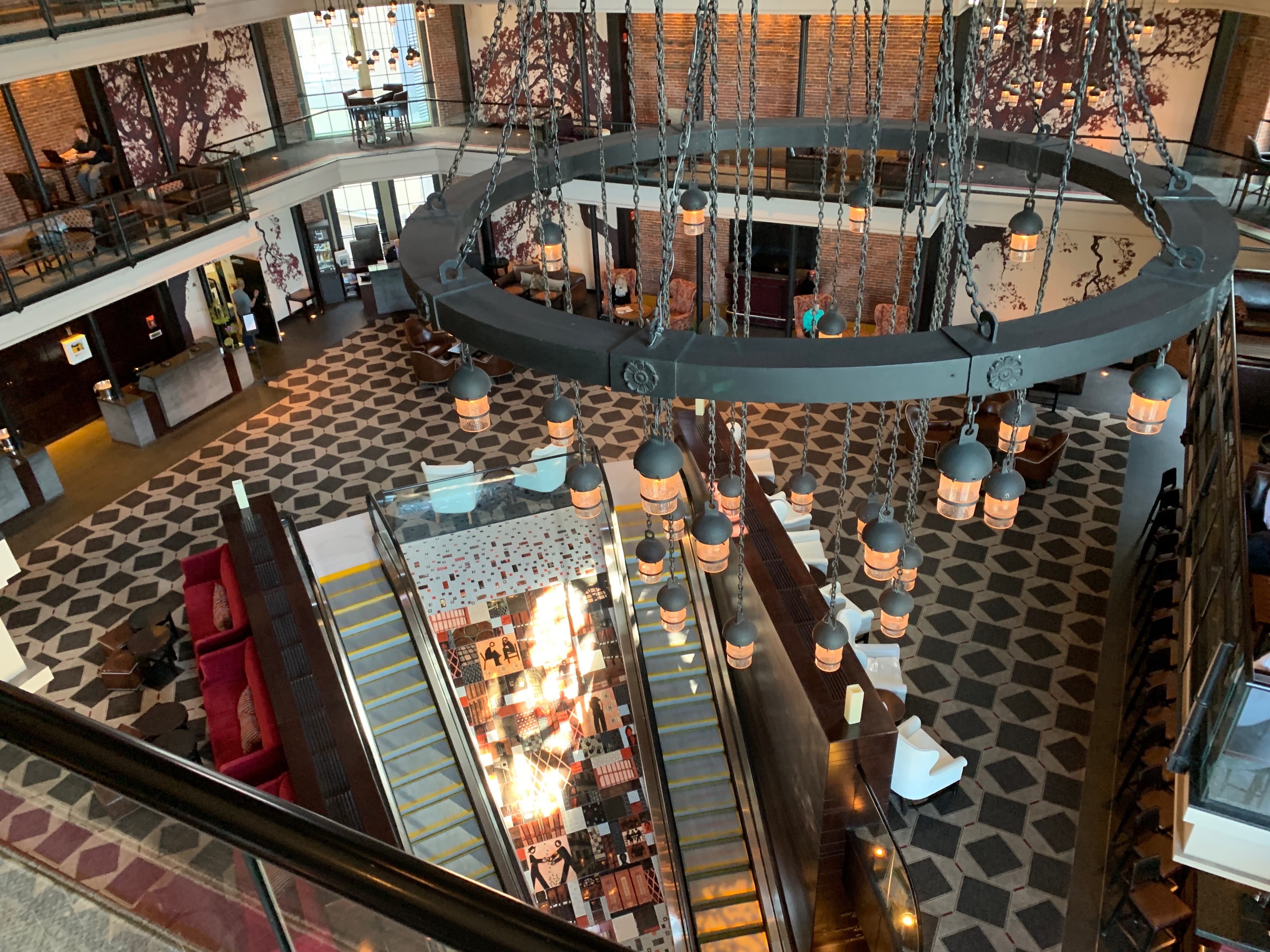
Hotels · 6 min
Hotel carpet cleaning without disrupting guests
How hotels across Massachusetts keep corridors, lobbies and ballrooms guest-ready with overnight extraction, block scheduling for guest rooms and a maintenance calendar that survives high season.
Read the guide
Senior Living · 6 min
Senior living carpet cleaning: odor and resident safety
Why senior living carpet needs a different approach — low-VOC chemistry, fast dry times, odor control at the source, and scheduling that respects residents' routines.
Read the guide