
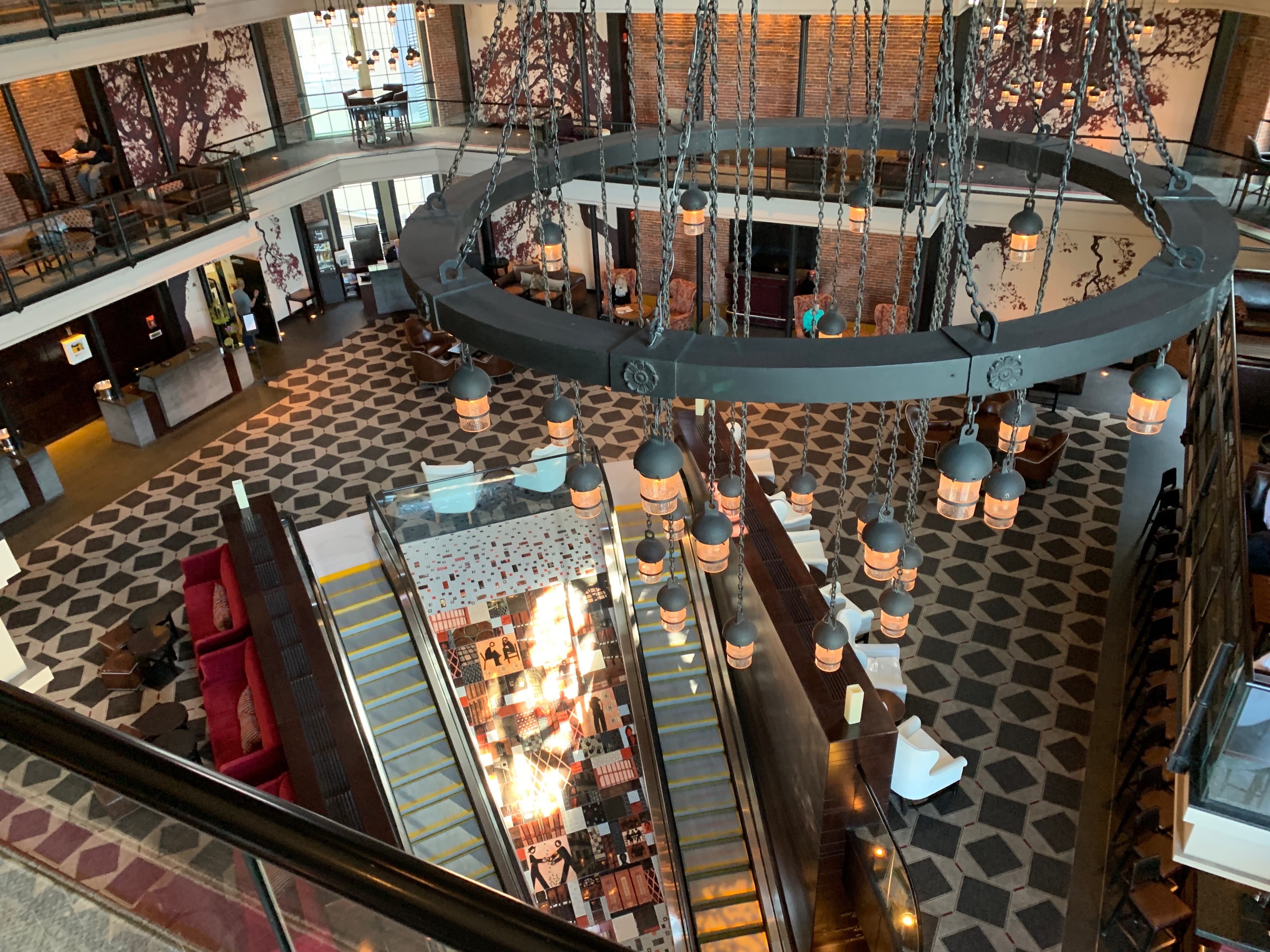
A hotel never closes, which means carpet cleaning has to happen inside the operation, not around it. After thirty years of servicing hotel properties across Massachusetts, Rhode Island and Connecticut, this is the approach that works — the one that keeps the front desk from ever fielding a complaint about it.
Corridors: the overnight window
Corridor carpet is the hardest-working textile in the building — luggage wheels, room-service carts, housekeeping, and every guest, every day. It's also the most visible. The only workable window is overnight, typically between 11pm and 5am, when hallway traffic is near zero. A crew can complete a floor of corridors in a few hours; with truck-mounted extraction the carpet is dry before the breakfast rush. Housekeeping never sees a wet floor.
- Work one floor per night on large properties so no guest is ever surrounded by equipment.
- Start at the elevator lobby (heaviest soil) and work outward.
- Hoses run from a stairwell or service entrance, never through the lobby.
- A quiet-hours protocol: no radios, doors propped only where needed, wand-only work near occupied rooms.
Lobbies, pre-function and ballrooms
Public spaces get scheduled around the events calendar, not the clock. Ballroom carpet should be cleaned after the last event of a busy stretch and before the next one loads in — often a two-day gap that's easy to miss if nobody's watching the banquet calendar. Lobbies are best done in the small hours with a section-at-a-time approach so the entrance stays open. Lobby seating and upholstered furniture can be cleaned the same night; our dry-master upholstery process dries in about an hour.
Guest rooms: block scheduling
Guest-room carpet gets cleaned in blocks, coordinated with the revenue manager: a set of rooms is taken out of inventory for a night, cleaned in the afternoon, and returned to inventory the next morning. Suites and rooms that have had a pet stay or an incident get done on turnover. The key is to book the blocks in the shoulder season so you're not pulling rooms during a sold-out weekend.
A calendar that survives high season
| Area | Frequency | Window |
|---|---|---|
| Corridors and elevator lobbies | Every 2–3 months | Overnight, one floor per night |
| Main lobby | Every 2–3 months, spot-clean weekly | Overnight, sectioned |
| Ballroom and pre-function | After heavy event runs; at least quarterly | Between events |
| Restaurant and bar | Every 2–3 months | After close |
| Guest rooms | Every 6–12 months; on turnover as needed | Afternoon blocks in shoulder season |
| Back of house | Every 6 months | Any |
What the cleaning crew needs from the hotel
- A named overnight contact (MOD or engineering) who can open doors and answer questions.
- Parking near a service entrance for the truck, with a hose route mapped in advance.
- Advance notice of VIP floors, blocked rooms or events so the schedule can move.
- Brand standards, if any — some flags specify products or documentation, and we can work to them.
Questions we get about this
Related services
Keep reading
More guides for facility managers
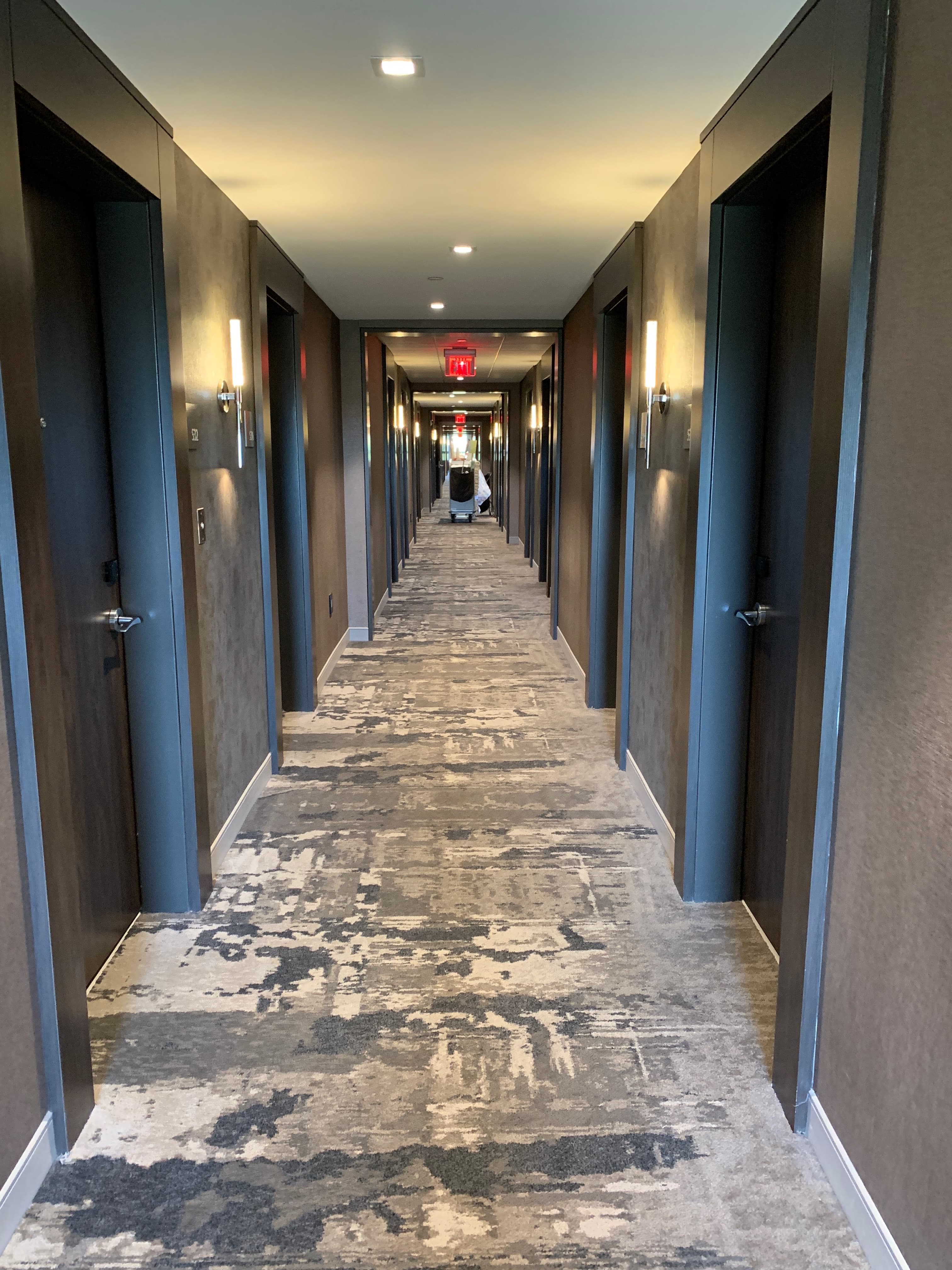
Carpet · 6 min
How often should commercial carpet be cleaned?
Deep-extraction frequency for hotel corridors, senior living common areas, offices and healthcare — and the daily/weekly maintenance that stretches the time between visits.
Read the guide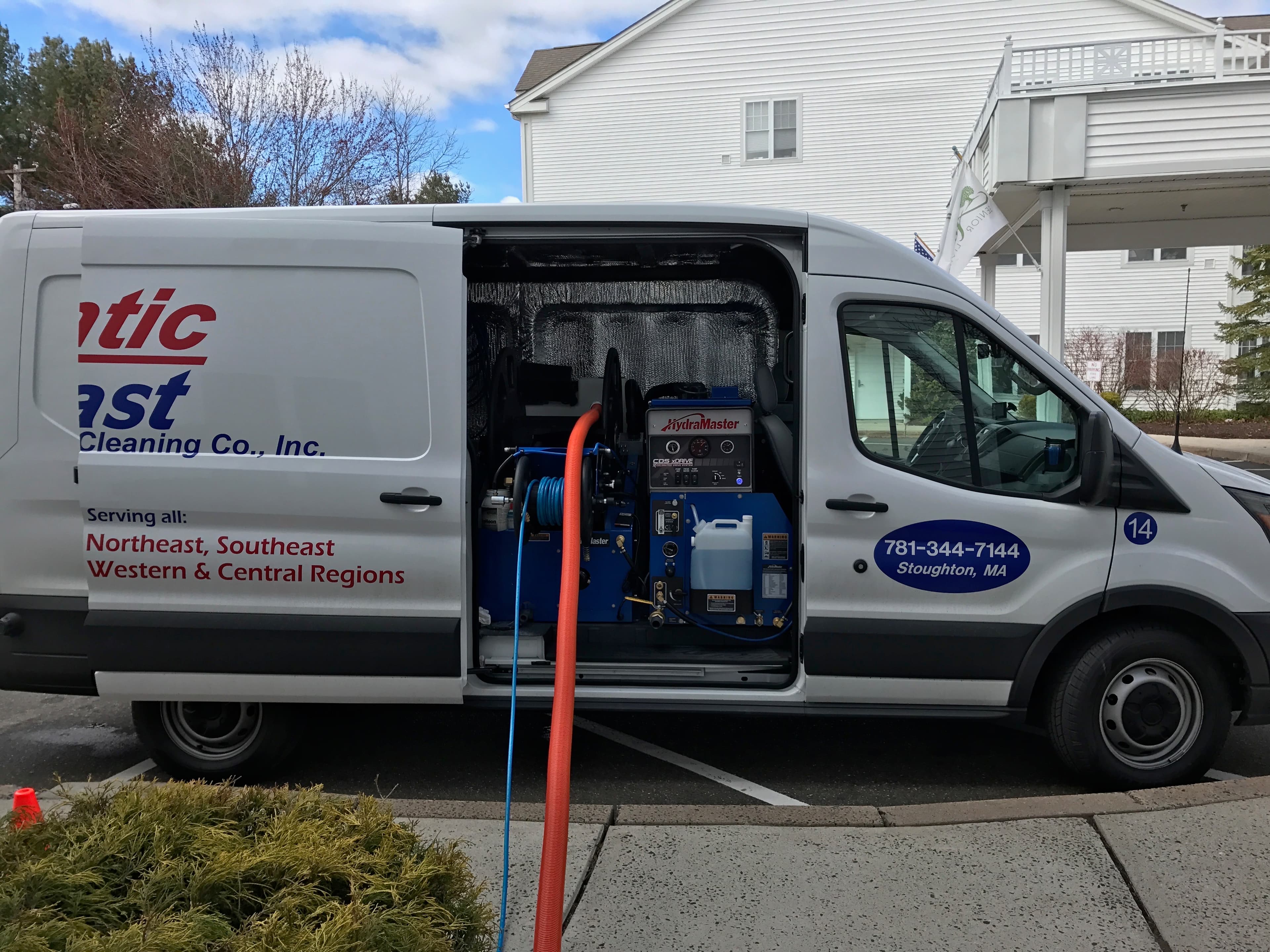
Carpet · 5 min
Truck-mounted vs. portable extraction
The difference in heat, pressure and recovery between truck-mounted and portable carpet cleaning equipment — and what it means for dry time, residue and how long a commercial carpet stays clean.
Read the guide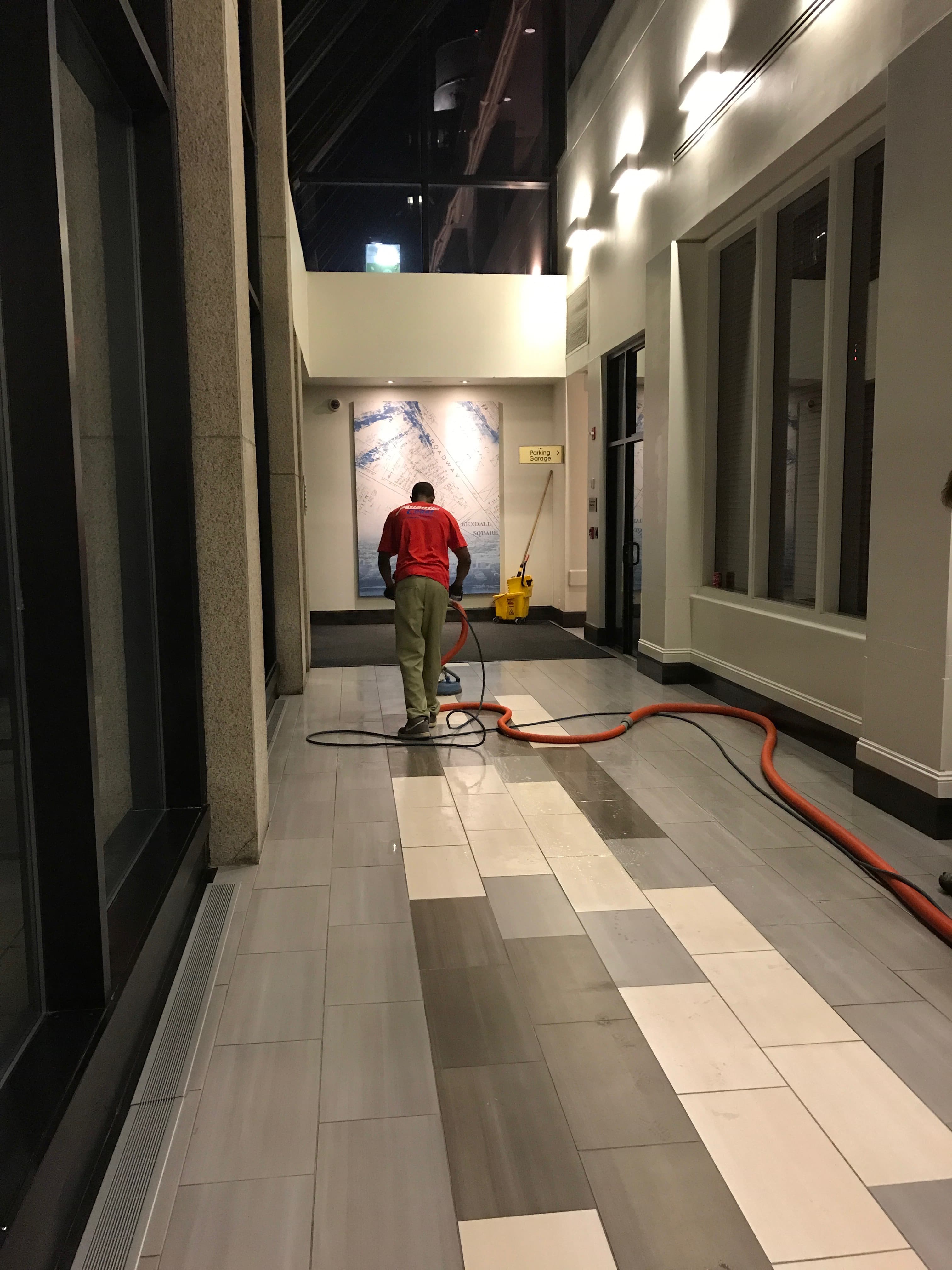
Tile & Grout · 5 min
Why grout turns dark, and how to restore it
What makes tile and grout in commercial restrooms, kitchens and lobbies discolor, why mopping makes it worse, and how high-pressure, high-temperature restoration brings it back.
Read the guide