
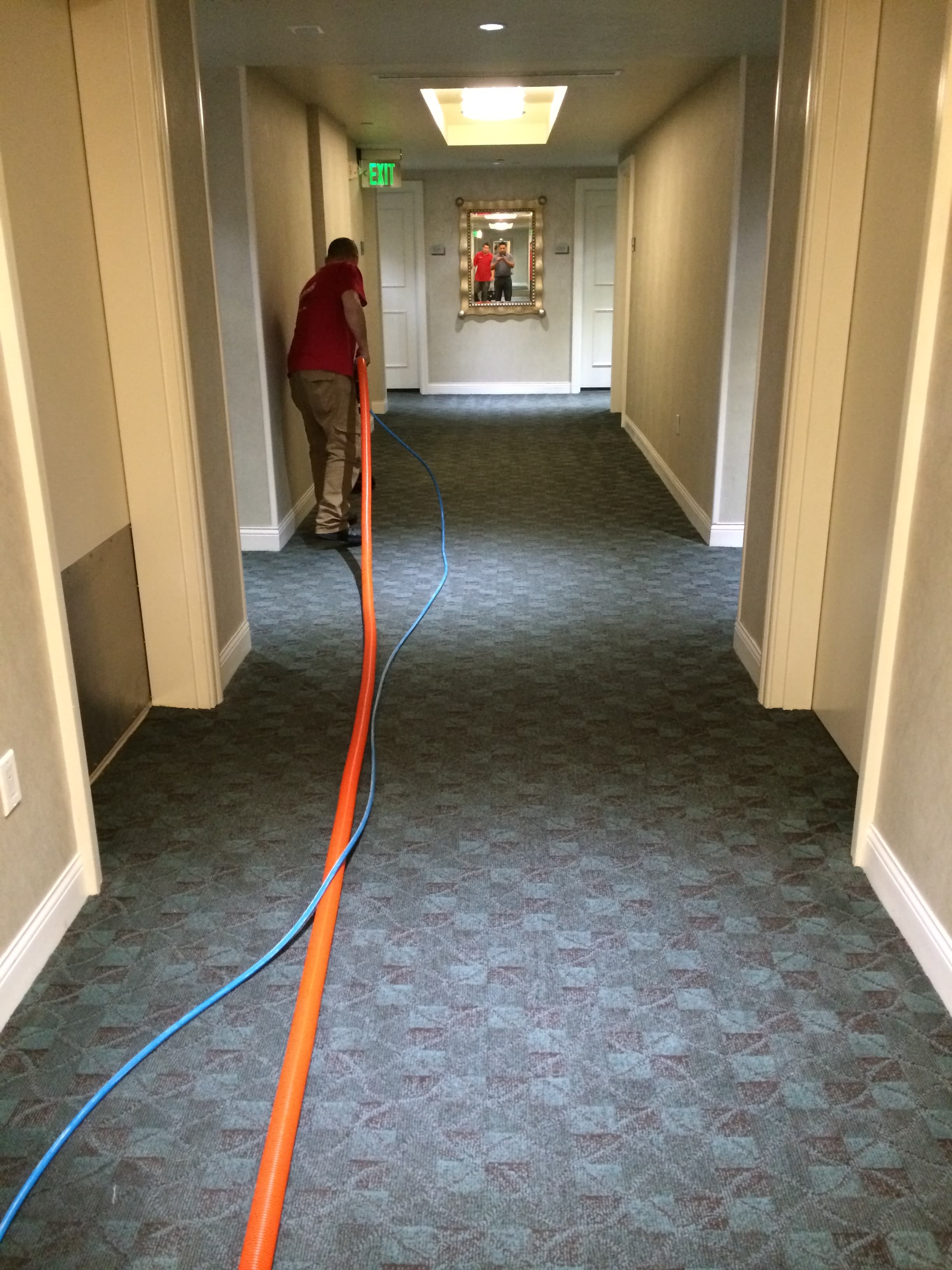
A commercial carpet cleaning visit goes smoothly when a few things are sorted before the truck arrives. Most of this takes ten minutes of planning and saves an hour on the night.
Before the visit
- Confirm the window and the contact. Overnight jobs need someone reachable who can open doors — an MOD, engineer or security lead — and a phone number the crew can actually call at 1am.
- Parking and hose route. The truck needs to park close to an entrance; the hose comes in through a service door, loading dock or propped stairwell door, not through the lobby. Tell us if there's a gate code.
- Clear the small stuff. Waste baskets, floor mats, plant stands, chair mats and anything under a desk that isn't furniture. We move light furniture; desks, filing cabinets and beds stay in place and we clean around and under the edges.
- Flag problem areas. Spills, incident spots, odor complaints and anything that's already been treated with a store-bought product. Pre-treatment is different for each, and we'd rather know than guess.
- Tell the building. A note to staff or residents that cleaning is happening overnight, and that carpet may be slightly damp early in the morning, avoids the confused phone call.
- Alarms and HVAC. Let security know the crew is expected, and leave HVAC running — air movement is what dries carpet.
During the visit
Our equipment stays in the truck; inside, you'll see a hose, a wand and a technician. Work is sectioned so there's always a dry path. Wet-floor signage goes up in active areas. The crew won't use radios and keeps doors propped only where the hose needs to pass. If something unexpected comes up — a locked wing, a spill that turns out to be a stain — the on-site contact gets a call, not a surprise in the morning.
After the visit
- Dry time. High-traffic corridors are typically dry in 2–4 hours with truck-mounted extraction. Keep HVAC running and, if possible, foot traffic off the heaviest areas until the pile is fully dry.
- Furniture. Anything we moved goes back; anything on tabs or blocks should stay on them until the carpet is dry to avoid wood stain or rust transfer.
- Grooming marks. Freshly extracted carpet shows wand lines. They vacuum out on the first pass.
- Walkthrough. We inspect with you before we leave on the first visit and at any time you ask.
Questions we get about this
Related services
Keep reading
More guides for facility managers
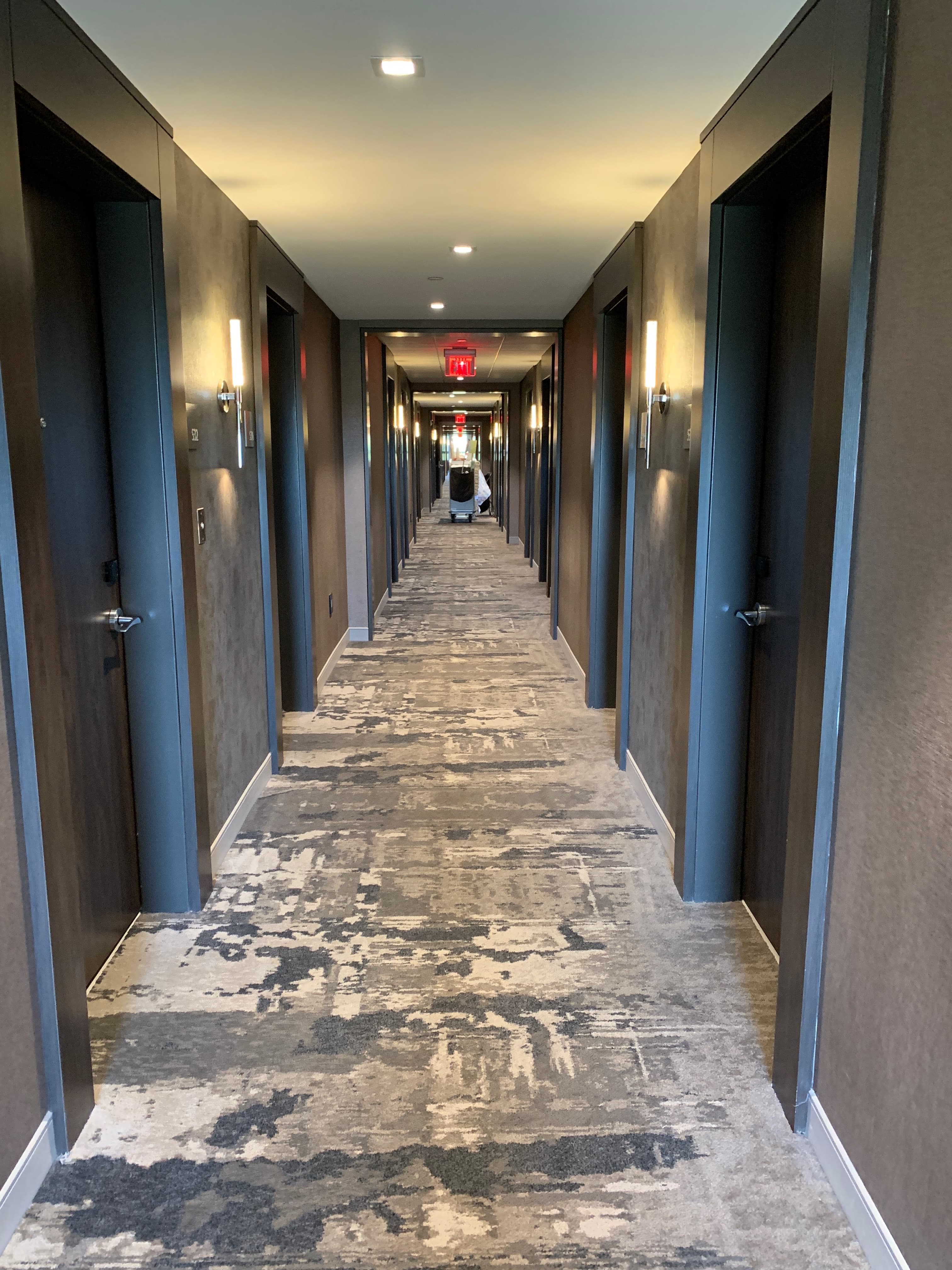
Carpet · 6 min
How often should commercial carpet be cleaned?
Deep-extraction frequency for hotel corridors, senior living common areas, offices and healthcare — and the daily/weekly maintenance that stretches the time between visits.
Read the guide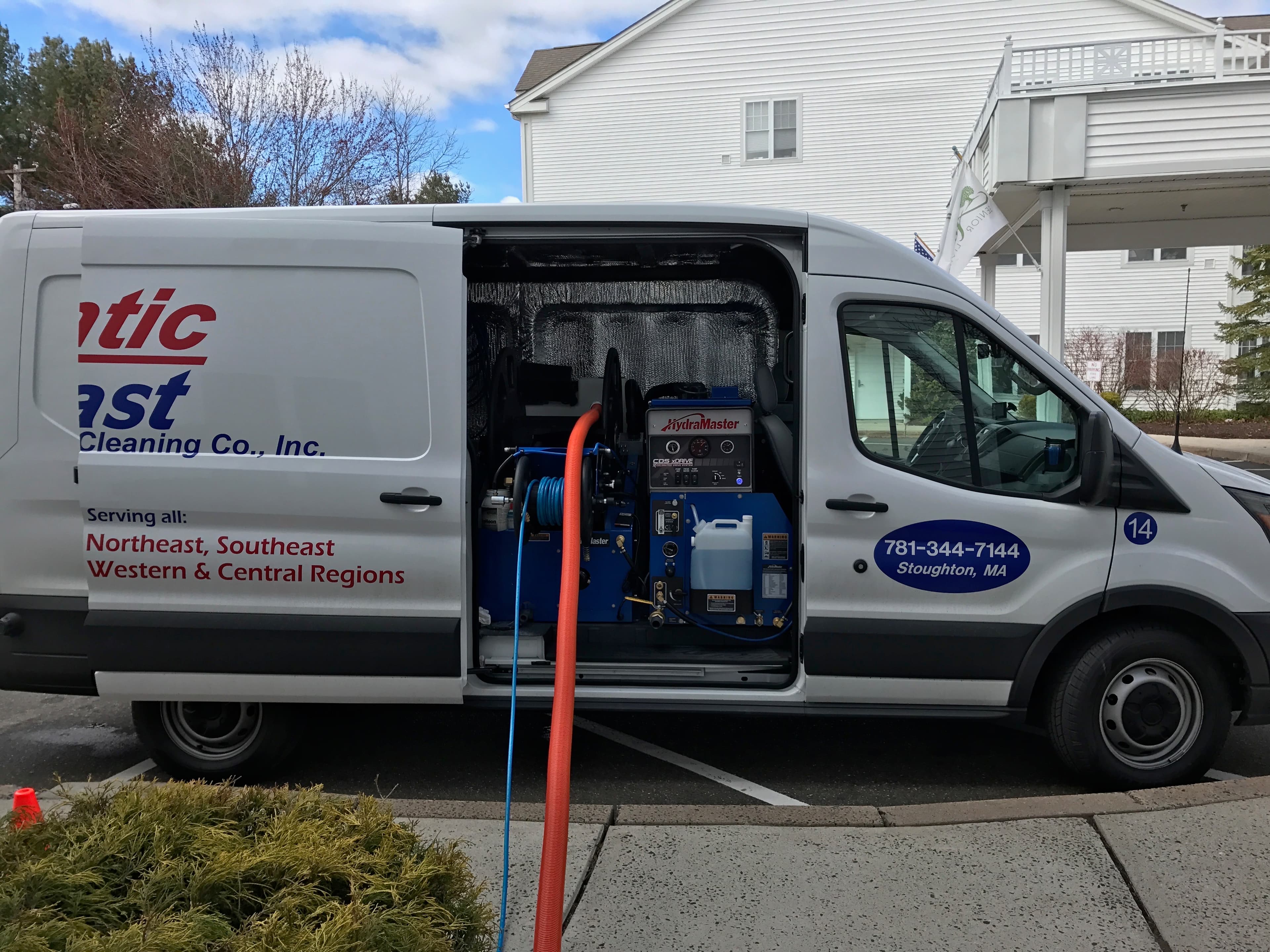
Carpet · 5 min
Truck-mounted vs. portable extraction
The difference in heat, pressure and recovery between truck-mounted and portable carpet cleaning equipment — and what it means for dry time, residue and how long a commercial carpet stays clean.
Read the guide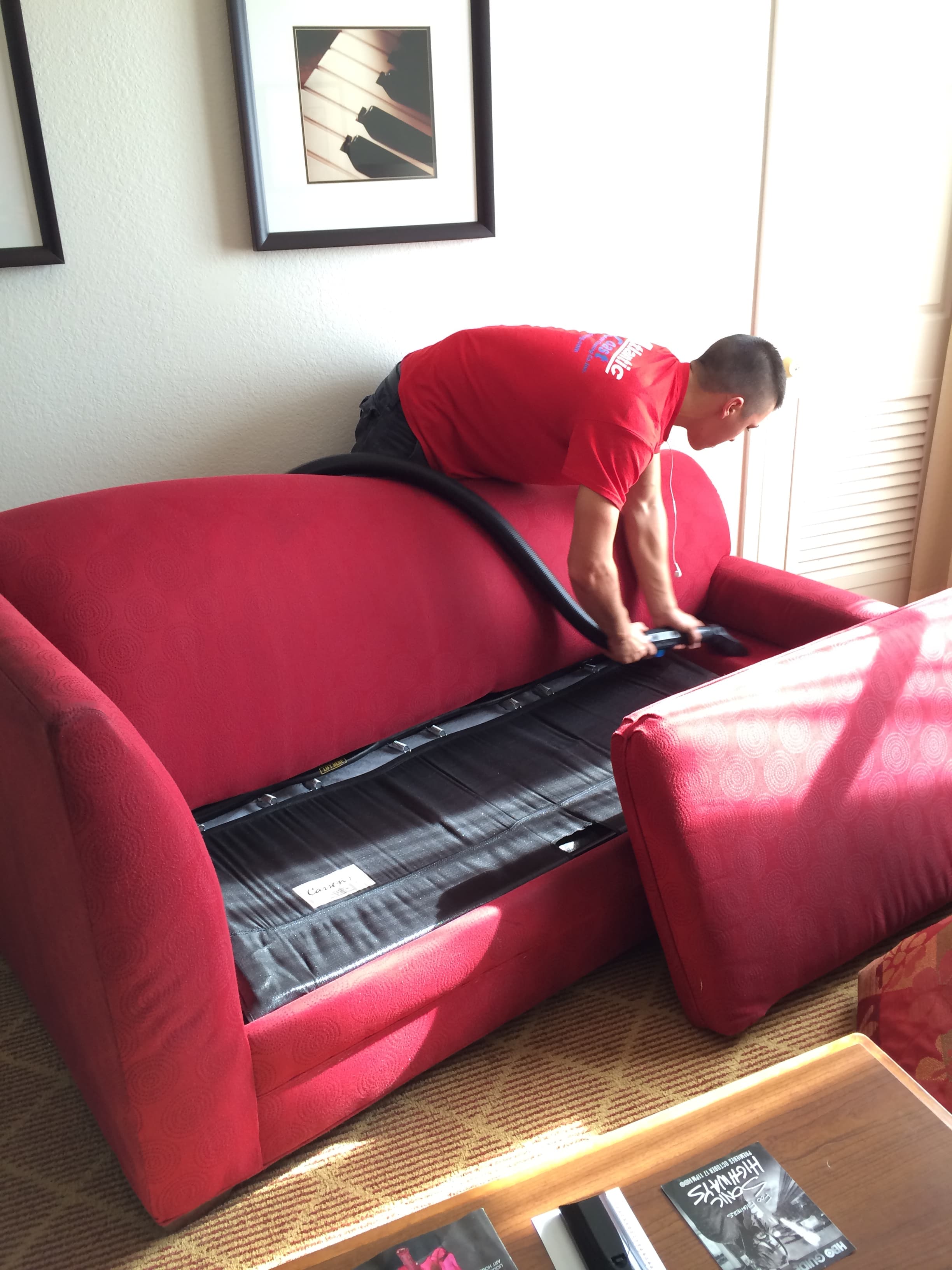
Senior Living · 6 min
Senior living carpet cleaning: odor and resident safety
Why senior living carpet needs a different approach — low-VOC chemistry, fast dry times, odor control at the source, and scheduling that respects residents' routines.
Read the guide